 News
News
VISIT OF VIRGINIA TROCONIS & RTVE
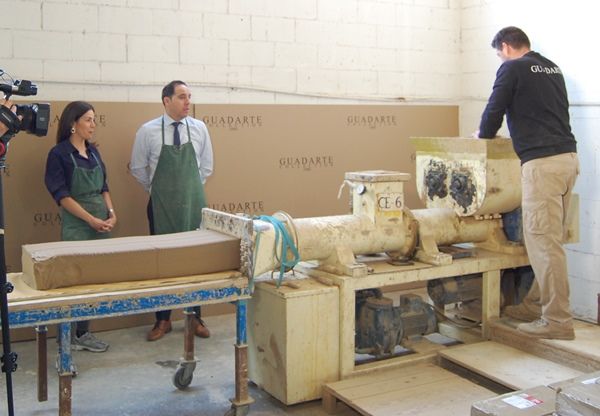
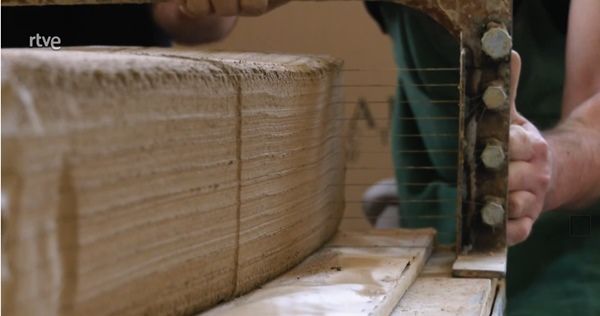
The first step in the manufacture of a ceramic basin consists of making the clay itself from selected raw materials.. This process includes the recycling of ceramic materials and their subsequent lamination to obtain a homogeneous and manageable mass.. Achieving a unique and exclusive Guadarte clay with chromatic and hardness qualities characteristic of the brand.. This preparation is crucial to ensure that the clay is suitable for application in the mold and allows work with precision and quality in the subsequent stages of manufacturing..
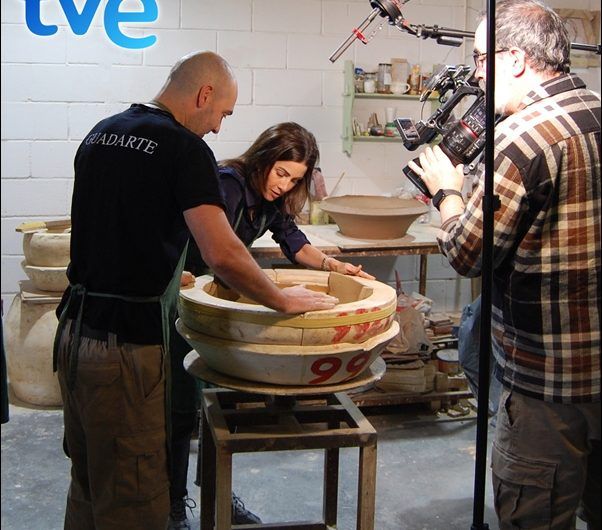
Once the mud is prepared, It is manually pressed into the mold. This step requires skill and patience, since it is essential that the clay fits perfectly to the contour of the mold. Using your hands, the artisan presses and shapes the clay to ensure uniform distribution and eliminate possible air pockets, thus guaranteeing the structural integrity of the basin.
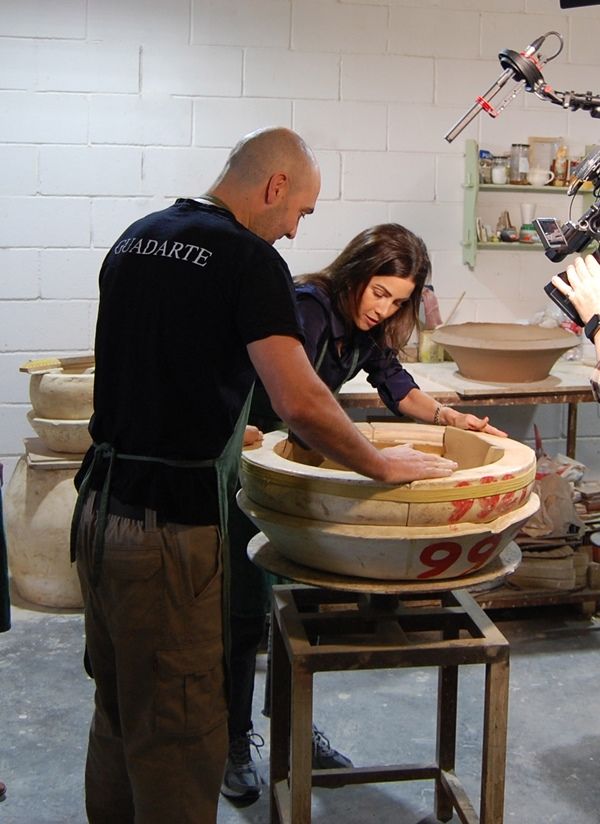
After having pressed the clay into the mold and ensuring that it has taken the desired shape, The piece is removed from the mold with great care.. This step is delicate, since the ceramic is still in a fragile stage and any sudden movement could deform or break it. Careful unmolding ensures that the basin retains its perfect shape and is ready for the following finishing and firing phases..
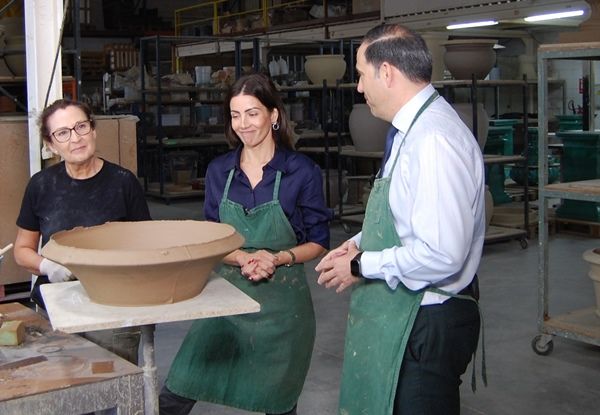
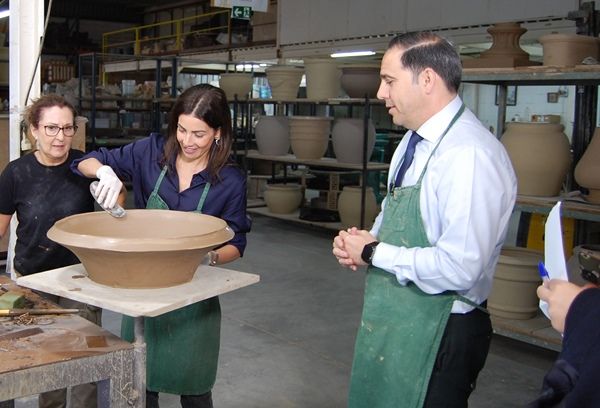
Once unmolded, The piece goes through a meticulous purification and cleaning process. Using a small blade, Impurities and remains of mud that may have adhered are carefully removed.. This stage is essential to perfect the details of the basin, ensuring that its surface is smooth and free of imperfections before proceeding with cooking.
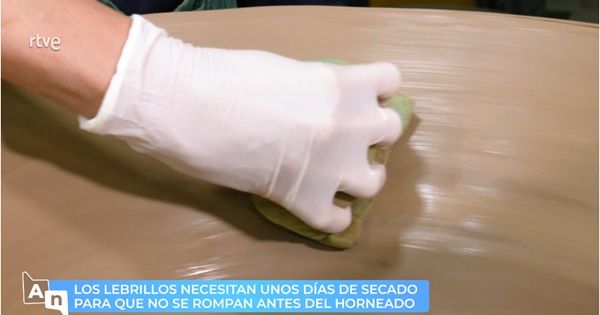
After debugging and cleaning, the lebrillo undergoes natural drying. This process, which can last several days, depends largely on the temperature and humidity of the environment. During drying, It is crucial that the piece remains in a well-ventilated location to prevent warping and ensure moisture evaporates evenly., thus preparing the ceramic for the final firing stage.
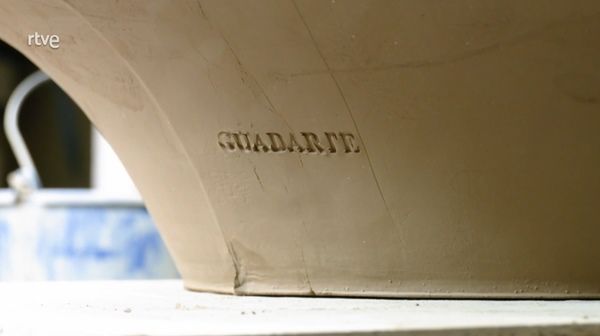
Once the basin has completely dried, proceed to the cooking stage in an oven. The piece is fired at a temperature of approximately 1,200ºC. This high temperature firing process is essential to vitrify ceramics., giving it its characteristic resistance and durability, as well as permanently fixing any previously applied decoration or glaze. At the end of cooking, the basin is ready for use or to receive additional finishes if necessary.
Before applying decorative paint, the basin goes through a first quality control. During this stage, the piece is thoroughly inspected for possible defects, like cracks, deformations or irregularities on the surface. Only pieces that meet quality standards advance to the decoration process. This control is essential to ensure that the final product is not only aesthetically pleasing, but also functional and durable.
With the piece already enamelled, manual painting is carried out, using the charcoal stencil technique. This method involves the use of stencils to apply precise and detailed designs onto the surface of the basin.. Charcoal allows patterns to be clearly outlined, serving as a guide for the subsequent application of colors. This artisanal work highlights the beauty and uniqueness of each piece, providing a personal and artistic touch that distinguishes the ceramic basin.
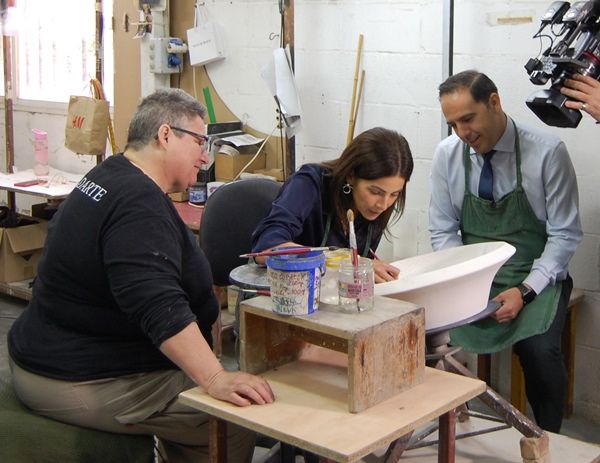
After applying the decorative paint using the charcoal stencil technique, the lebrillo undergoes a second firing. This stage is crucial to permanently fix the decorative design on the enamelled surface.. The piece is placed back in the oven and fired at a controlled temperature., which ensures that the colors and patterns are perfectly integrated and long-lasting. This final firing not only enhances the aesthetics of the basin, but also guarantees its resistance and functionality.
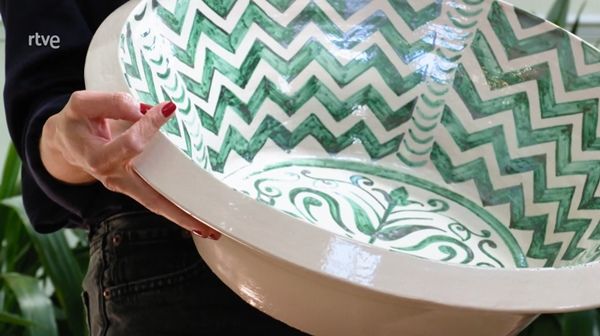
After the second firing and before finishing the manufacturing process, a final quality control is carried out. During this phase, Each basin is meticulously inspected to verify that the decorative design is correctly attached, that there are no visible defects on the surface and that the piece meets established quality standards. Any imperfection or irregularity detected is corrected before the piece is considered suitable for distribution.. This control ensures that each ceramic basin that leaves the factory meets the highest quality standards and meets customer expectations..